How I Made $16,000 in 9 Minutes with the Williams R and Stochastic Binary Options Strategy
Making consistent profits in binary options requires more than luck. You need a system that is simple, reliable, and proven over time. One such method is the Williams R and Stochastic binary options strategy, a powerful combination of two oscillators that provide clear signals for short-term trades.
In this guide, I’ll walk you through exactly how the strategy works, explain Williams %R and Stochastic in detail, and show you real trade examples with video links. You’ll also learn how to manage risk, avoid common mistakes, and practice safely before going live.
👉 If you are looking for a broker, follow this link to PocketOption and test the Williams %R and Stochastic binary options strategy on a free demo account first or read our detailed guide of the platform.
⚠️ Risk Disclaimer
Binary options are a high-risk financial instrument. Trading may not be suitable for all investors, and you should never risk money you cannot afford to lose. The strategies and examples shown in this article and video are for educational purposes only and should not be considered financial advice.
Make sure to read our Risk Disclaimer.
📺 Watch the Strategy in Action
I know some traders prefer a visual explanation with audio narration rather than just reading text. If you are one of them, you’ll find the full step-by-step breakdown in the video above. Watching the live trade examples makes it easier to see how the strategy plays out in real market conditions, and you can pause or replay key moments anytime.
Understanding Williams R
To trade with the Williams R and Stochastic binary options strategy, you must first understand Williams %R.
What is Williams %R?
- Created by Larry Williams, this momentum oscillator measures overbought and oversold conditions.
- Scale: 0 (overbought) to -100 (oversold).
- Common levels:
- Above -20 → overbought zone.
- Below -80 → oversold zone.
How it Works
Williams %R compares the current closing price to the high-low range over a set period (default = 14, but here we use 7). Shorter periods make it more sensitive, which is why this strategy works well on 30-second charts.
Why It Matters
- Overbought → possible down move.
- Oversold → possible up move.
- Crosses above/below key levels act as triggers for binary trades.

⚠️ Important Note on Williams %R Signals
As visible on the image, not every small fluctuation should be treated as a valid signal. The Williams R and Stochastic binary options strategy works best when Williams %R makes a clear, sharp cross through the overbought or oversold levels. Weak touches or sideways wiggles often lead to false signals. By focusing only on decisive crosses, you greatly improve the accuracy of your entries.
Understanding the Stochastic Oscillator
The second part of the Williams %R and Stochastic binary options strategy is the Stochastic oscillator.
What is Stochastic?
- Created by George Lane.
- Measures momentum by comparing current close to price range over a set number of periods.
- Consists of two lines:
- %K (blue, fast line)
- %D (orange, signal line, smoothed).
Settings for this Strategy
- %K = 7
- %D = 4
- Smoothing = 3
- Type = exponential moving average (EMA)
Why It Matters
- Bullish signal: Blue line crosses above orange.
- Bearish signal: Blue line crosses below orange.
- Works well in short-term reversals, especially when combined with Williams %R.

⚠️ Important Note on Stochastic Signals
As you can see in the image, not every small crossover between the blue and orange lines should be considered a valid entry. The Williams R and Stochastic binary options strategy becomes more reliable when you wait for a decisive, clean crossover supported by momentum, rather than reacting to brief touches or noisy moves. Focusing only on strong signals helps avoid false trades.
Why Combine Williams %R and Stochastic?
Individually, both oscillators generate many false signals. Together, they filter noise.
- Williams %R detects overbought/oversold conditions.
- Stochastic confirms momentum shifts.
- Combined → Higher accuracy, fewer false entries.
This makes the Williams R and Stochastic binary options strategy one of the simplest yet most reliable systems for beginners and professionals alike.
If you prefer combining oscillators with moving averages, take a look at the Fractal and Moving Average Crossover strategy and see it in action in a $10 challenge.
Setting Up the Strategy
To use the Williams R and Stochastic binary options strategy effectively, configure your platform as follows:
- Timeframe: 30 seconds
- Trade duration: 1 minute (use free expiration mode)
- Indicators:
- Williams %R (period 7)
- Stochastic Oscillator (%K=7, %D=4, smoothing=3, EMA)
- Assets: Focus on instruments with high payout rates.
👉 For detailed setup steps, have a look at the YouTube video.

👉 Pro Tip: Always check payouts during your session. They fluctuate, and it’s not worth risking money on low-paying assets.
Recognizing Buy and Sell Signals
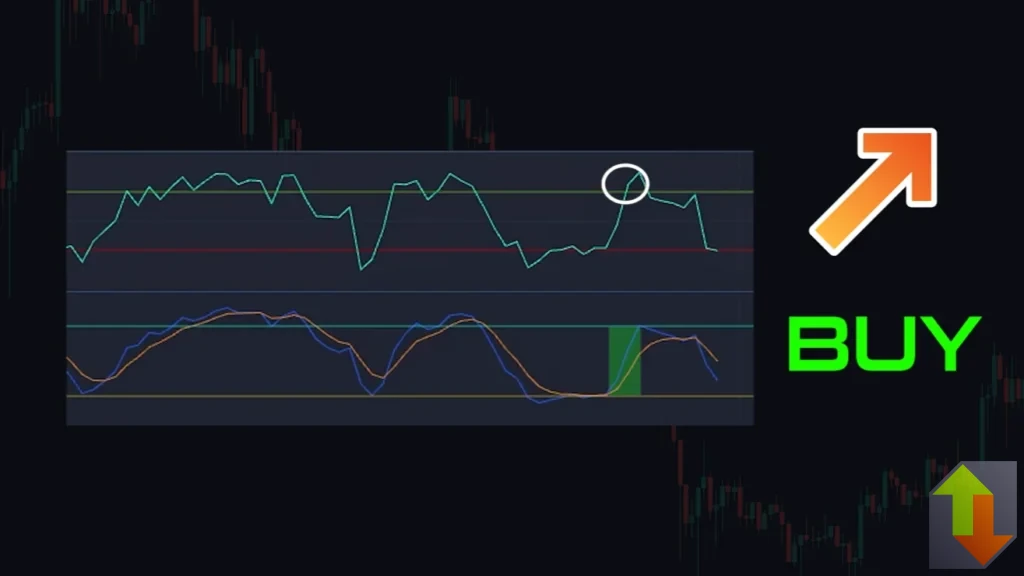
To apply the Williams R and Stochastic binary options strategy effectively, you must learn to recognize clear buy and sell signals. The images below show what strong setups look like:
- Buy Signal Example: Williams %R crosses upward above the oversold line while Stochastic’s blue line crosses above the orange line. This combination suggests bullish momentum.
- Sell Signal Example: Williams %R crosses downward below the overbought line while Stochastic’s blue line crosses below the orange line. This indicates bearish momentum and a potential down move.
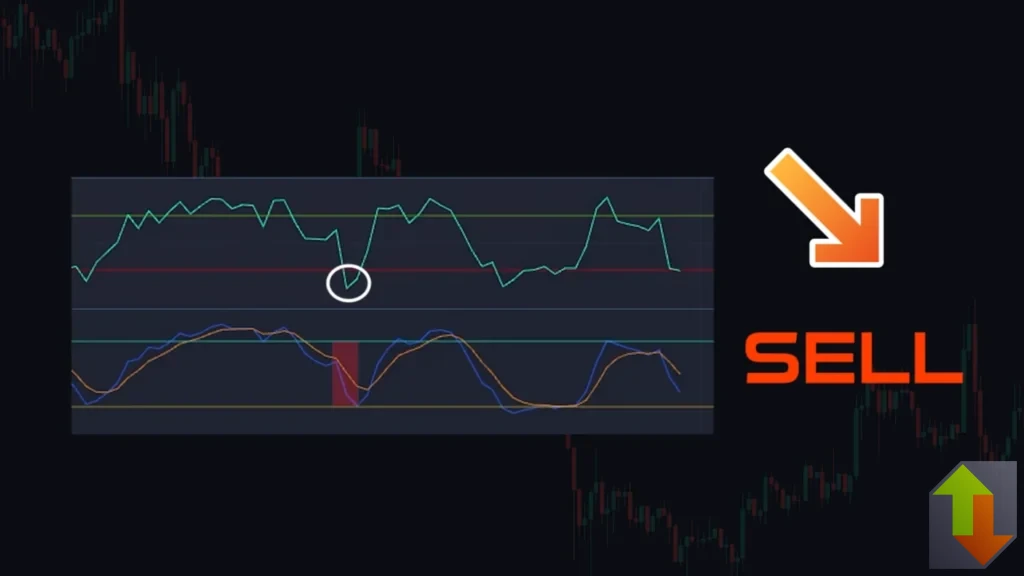
These examples act as a quick visual checklist to help you identify setups in real time, before moving on to the live trade examples.
Step 5: Trade Examples
Example Trade 1 – Bullish Reversal
Williams R crossed upward above the green line after a prolonged downtrend. Stochastic confirmed with a bullish cross (blue above orange). Price began forming higher highs and lows. I placed a call (BUY) option.
Result: Win ✅

Example Trade 2 – Uptrend Continuation
A very similar setup appeared shortly afterward. Once again, Williams %R crossed upward through the oversold zone while Stochastic’s blue line moved above the orange line. The alignment was clear, and I placed another call (BUY) option.
Result: Win ✅
(No additional image here, since the setup looked nearly identical to the first trade. Instead, you can review it directly in the video.)
Example Trade 3 – Bearish Setup at Resistance
After consolidation, resistance held. Williams R crossed downward below the red line. Stochastic confirmed bearish momentum. I placed a put (SELL) option.
Result: Win ✅ (tight finish).

Why Patience Matters
The Williams R and Stochastic binary options strategy requires waiting for both indicators to align. Many beginners lose money by entering early.
- Wait for candle close before confirming the cross.
- Skip trades when price is choppy.
- Patience leads to higher win rates.
Risk Management Reminder
⚠️ Risk Disclaimer
Binary options are a high-risk financial instrument. Trading may not be suitable for all investors, and you should never risk money you cannot afford to lose. The strategies and examples shown in this article and video are for educational purposes only and should not be considered financial advice.In the video demonstrations I sometimes risk the full account balance for showcase clarity. This is not recommended in real trading. Professional traders limit risk per trade to 1–2% of their account and focus on long-term discipline.
Past results, including the profits shown in this video, do not guarantee future performance. Always practice on a demo account first before investing real money.
➡️ Try PocketOption on demo mode to test strategies safely without financial risk.
In real trading:
- Never risk more than 1–2% of your account on a single trade.
- Track payouts and avoid low-return assets.
- Stay disciplined — overtrading kills profits.

Practicing the Strategy
Binary options are exciting but can be stressful. Watching a trade go against you doesn’t always mean it will lose. With fixed expiry, only the end result matters.
Practice this system on demo first:
- Test multiple market conditions.
- Log your trades.
- Identify when the strategy works best.
Best Practices for Success
- Trade during active sessions (London/New York overlap).
- Focus on high payout pairs.
- Combine with support/resistance for stronger confirmation.
- Avoid overtrading — quality over quantity.
Common Mistakes
- Entering before candle close.
- Trading against strong support/resistance.
- Ignoring payout changes.
- Risking too much per trade.
- Believing every cross is valid (context matters).
FAQs
Final Thoughts
The Williams R and Stochastic binary options strategy is a proven way to capture short-term price moves with strong confirmation. Simple, powerful, and effective when paired with patience and discipline.
For a trend-based alternative, read my Heiken Ashi and SuperTrend binary options strategy, which works well on fast timeframes.
Start safely:
➡️ Sign up with PocketOption and receive a 50% bonus on your first deposit with code 50START.
And don’t forget to subscribe to my YouTube channel for more strategies, live examples, and tested trading systems.